

7 Steps to Authenticate Vintage Designer Bags
Quick Summary
To authenticate vintage designer bags online, start with a careful photo check that asks for front and back views, interior stamps or date codes, close-up hardware, stitching, and base wear. Read each detail against the era the bag claims to be from, since older bags legitimately differ from modern ones.
- Request unstuffed front and back photos in natural light before paying.
- Check interior stamps or date codes against the era the bag claims.
- Irregular hand stitching and patina can be normal on older bags.
- Ask reviewers to name the specific details behind their conclusion.
- Walk away from sellers who refuse extra photos or cannot name the decade.
Table of Contents
- How to Authenticate Vintage Designer Bags Online: Start With a Photo Check
- Bag Authenticity Check Online: Using Apps and Remote Photo Checklists
- Free Bag Authentication App or Professional Service: Choosing the Right Option
- Frequently Asked Questions
How to Authenticate Vintage Designer Bags Online: Start With a Photo Check
Last Updated: November 2, 2026
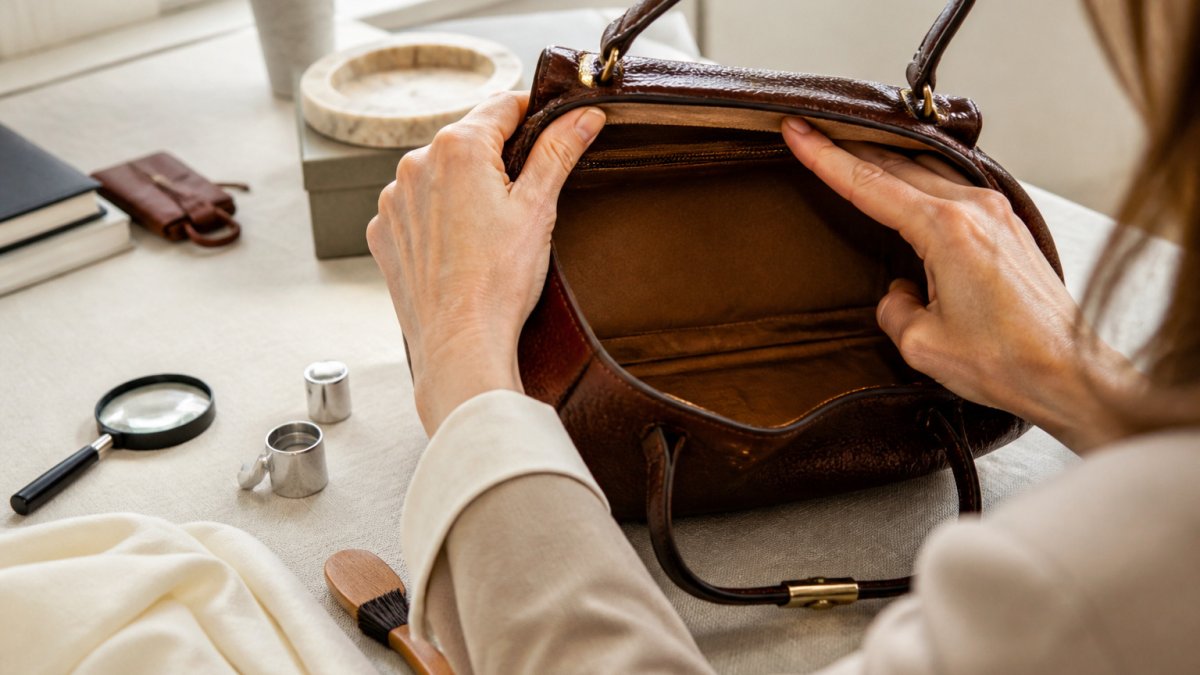
Vintage designer bags are hard to judge from a listing because the rules for a bag made last year don't apply to one made in 1985: logos were redrawn, hardware sourced differently, linings swapped, and date-code systems revised or retired. Authenticating vintage designer bags starts with a careful photo check read against the era the bag claims to be from.
Before you pay, ask for these photos:
- Front, back, and both sides in natural light, bag standing and unstuffed
- A straight-on close-up of the interior stamp or date code
- Hardware up close, engraving included
- Stitching along handles, corners, and strap attachments
- Lining, pockets, and zipper pulls, including manufacturer's markings
- The base and feet, which show wear patterns that are hard to fake
Look for even stitching and sharp, clean logos, but read those signals through the lens of age: a 1990s bag may legitimately have slightly irregular hand-finished stitching, an off-center stamp, or warmer-toned hardware. Worn patina, darkened handles, and softened corners are normal on true vintage pieces and not counterfeit clues on their own.
Experienced authenticators separate two questions: does this detail match the brand's known production for that era, and does it match normal wear for a bag of that age? A replaced lining or repaired handle can be plausible on a forty-year-old piece, what matters is whether the seller discloses the repair and whether the remaining construction still lines up with the brand's methods.
Watch out: A seller who refuses extra photos, reuses stock images, or cannot say which decade the bag is from is a red flag. Walk away.
The steps for a photo check come down to a few key details to request and examine:
| Photo to request | What it shows | Why it matters |
|---|---|---|
| Front and back, unstuffed | Overall shape and condition | Shows the bag as it is |
| Interior stamp or date code | Brand marking and era | Checked against the era the bag claims |
| Hardware close-ups | Engraving and finish | Engraving and finish are checked against the era |
| Stitching at handles and corners | Construction quality | Irregular hand stitching can be normal on older bags |
| Lining, pockets, zipper pulls | Manufacturer's markings | Shows whether the interior matches the brand's methods |
| Base and feet | Wear patterns | Wear patterns are hard to fake |
Bag Authenticity Check Online: Using Apps and Remote Photo Checklists
Online checks work best when you combine a structured photo set with a second opinion, understanding that photo-based review is evidence-based rather than definitive: a reviewer compares your images against known authentic examples and counterfeit patterns to help you authenticate vintage designer bags.
Use this checklist when you send photos for review:
- Full-length front and back photos, bag unstuffed, in indirect daylight
- Interior label or stamp, sharp and readable, shot straight-on
- Serial number or date code, if present, plus a wider shot showing its location
- Close-ups of each corner and handle attachment
- Hardware photos, one per metal piece, engraving legible
- Zipper pull and manufacturer markings
- Any repairs or aftermarket additions, photographed and disclosed
Lighting matters more than most buyers expect: direct flash blows out engraving and hides leather grain, while warm indoor light shifts metal color. Indirect daylight from a window, camera steady and detail filling the frame, gives a reviewer the best chance of a confident answer.
A missing or unclear code does not prove a bag is fake, vintage pieces often have worn, faded, or absent identifiers. The useful question is whether the absence is consistent with the bag's era and model; a code present but in a format the brand did not use that year is a stronger warning sign than one simply worn away.
Ask the reviewer to state their confidence level and name the specific details behind the conclusion, a review that says "authentic" without pointing to the stamps, stitching, and hardware it relied on is less useful than one that explains its reasoning. If the bag is expensive or the photos are ambiguous, a second opinion is reasonable.
Watch out: Treat any service that promises a guaranteed verdict from blurry photos, or that will not explain its reasoning, as a screening tool at best rather than a final answer.
Free Bag Authentication App or Professional Service: Choosing the Right Option
Free apps and paid professional services serve different needs: free tools suit a quick first look, while a professional review gives a more reliable answer for expensive purchases.
Pick a professional service when the bag is high value or the photos are unclear; use a free app for fast screening before paying for a full review. Costs and turnaround times vary, so check current pricing on each service's own website.
No online check is a guarantee. Use these steps together and buy from sellers who share clear, honest photos.
Frequently Asked Questions
Is there a free way to authenticate designer bags?
Yes, you can start for free by comparing the bag's logo, stitching, hardware and date code against authenticated reference photos from reputable sources and by sending clear close-up photos to an authenticator who offers a free preliminary review. Free checks can flag obvious problems, but they cannot confirm authenticity with certainty, especially for older pieces where identifiers may be faded or missing. For a definitive answer on a valuable bag, a paid professional authentication is the more reliable route. Ask any provider what their process covers before you upload anything.
How do you check the authenticity of a vintage designer bag?
Work from the outside in: look at overall shape and symmetry, then the logo and any inside stamp or brand signature, then the stitching, which should be even and consistent with the brand's known construction. Next, check the hardware for weight, finish and engraving, and assess the leather for natural grain and texture. Look for a serial number or date code and confirm it matches the model and collection era. Vintage wear such as patina and edge darkening is normal; mismatched fonts, crooked stamps and sloppy stitching are warning signs that call for a professional opinion.
Can you authenticate a vintage designer bag online?
You can get a meaningful first opinion online by submitting a complete photo set, which should include the front, back, interior, logo, stamp, close-ups of the stitching and hardware, and any serial number or date code. Online review cannot examine weight, smell or the feel of materials in person, so results carry uncertainty. Missing or inconsistent identifiers are common on older bags and are not automatically proof of a fake. Treat an online check as guidance, and rely on an in-person or specialist review before paying a high price.
